

How to Dispose of Old Appliances: A Step-by-Step Guide
Last Updated: October 23, 2026
Quick Summary
To dispose of old appliances, first assess whether it still works, then choose from free municipal pickup, donation to nonprofits like Habitat for Humanity, certified recycling for hazardous components, or professional haul-away services. Your best option depends on the appliance's condition, your timeline, and access to transportation.
- Working appliances can be donated to Habitat for Humanity ReStore, Goodwill, Salvation Army, or local nonprofits serving low-income families.
- Refrigerators and freezers require certified technicians to recover refrigerants under federal EPA rules before recycling.
- Most cities offer free or low-cost curbside large-item pickup for appliances on designated collection days.
- Always disconnect appliances safely before removal: unplug units, shut off gas valves, turn off circuit breakers, and drain water from washers and dishwashers.
- Professional haul-away services charge per item or by volume and handle disconnection, transport, and verified recycling or donation.
Table of Contents
- Assess Your Appliance's Condition and Prepare for Removal
- Free Appliance Pickup Services
- Appliance Donation: Give Your Old Appliances a Second Life
- Appliance Recycling: Responsible Material Recovery
- Professional Appliance Haul Away and Removal
- Municipal and Curbside Large-Item Pickup
- How to Dispose of Old Appliances: Choose Your Best Option
- Frequently Asked Questions
Assess Your Appliance's Condition and Prepare for Removal
Before you dispose of old appliances, take time to evaluate what you're working with. The first step is determining whether the appliance still functions.
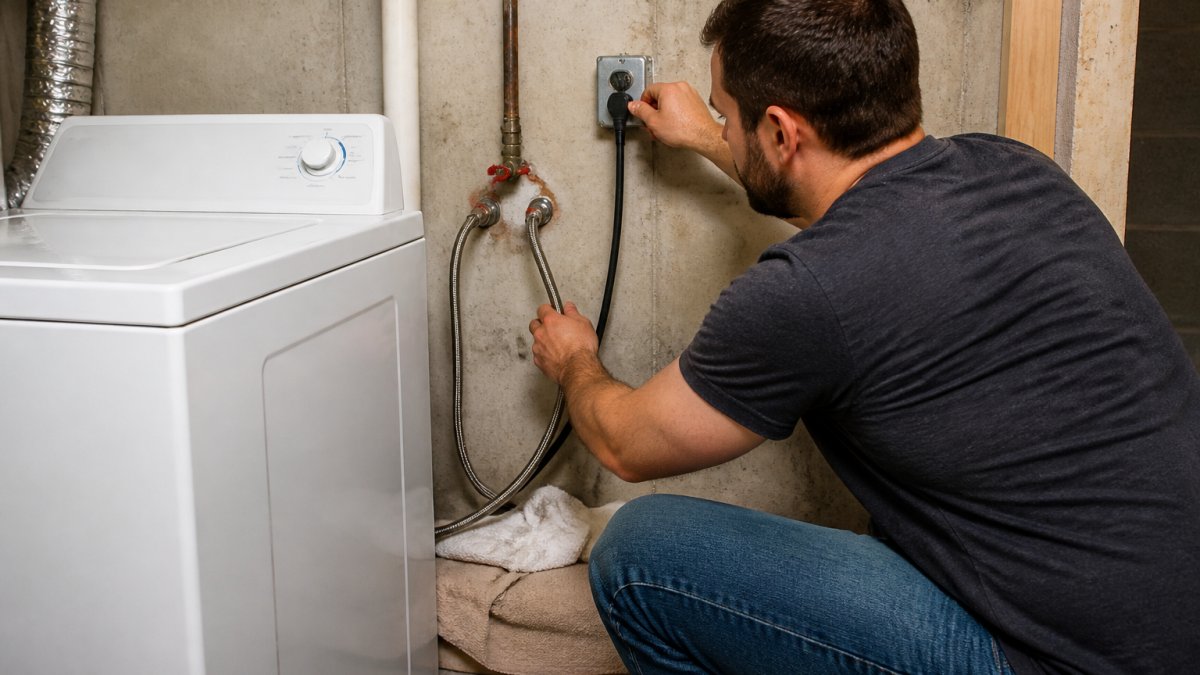
Check these points before removal day:
- Power status: Does it turn on? Does it complete a cycle?
- Physical condition: Are there cracks, rust, or missing parts?
- Age and model: Older appliances may have hazardous components
- Functionality: Does it heat, cool, spin, or wash as intended?
Once you know the condition, prepare the appliance for safe removal. Disconnection is where most injuries and code violations happen, so match the steps to the appliance type rather than treating every unit the same.
Appliance-specific preparation and safety
Refrigerators and freezers. Unplug the unit and empty it completely. Do not cut refrigerant lines or remove the compressor, refrigerants must be recovered by a certified technician under federal rules, and venting them is illegal (the EPA).
Gas ranges and ovens. Shut off the gas supply at the appliance valve before disconnecting the flexible connector.
Electric ranges and wall ovens. These are typically hardwired.
Washers. Close the hot and cold supply valves, then disconnect the hoses.
Dryers. Unplug the unit and disconnect the vent duct.
Dishwashers. Turn off the water supply and the breaker, then disconnect the supply line and drain hose.
Document the appliance's condition with photos before and after disconnection. This helps donation centers and recyclers assess what they're receiving, and it protects you if questions arise later about the item's state. Keep the manual or model number handy, recyclers and utilities sometimes ask for it, and some utility rebate programs require it.
Free Appliance Pickup Services
Many communities offer free pickup for large household appliances. These programs exist to keep appliances out of landfills and recover valuable materials.
Start by contacting your city's waste management department. Ask specifically about large-item pickup or bulk collection programs. Some municipalities schedule collection days monthly.
What to expect on pickup day:
- Timing: Collections happen on specific days. Mark your calendar.
- Placement: Put the appliance at the curb before dawn.
- No disassembly: Leave the appliance intact for safety.
- Verification: Crews may check that items meet program guidelines.
Call ahead to confirm your appliance qualifies. Some programs accept only working units. Others take any large item.
Appliance Donation: Give Your Old Appliances a Second Life
Donating works best when your appliance still functions. Nonprofits, thrift stores, and community organizations accept working refrigerators, washers, dryers, ovens, and other large appliances.
Organizations that accept donated appliances include:
- Habitat for Humanity ReStore: Accepts working appliances and building materials
- Goodwill and Salvation Army: Many locations take large appliances
- Local nonprofits: Community action agencies often run appliance programs
- Charities serving low-income families: Organizations focused on housing assistance
- Religious institutions: Churches and faith-based groups sometimes coordinate donations
Before donating, prepare the appliance properly. Clean it thoroughly inside and out. Wipe down surfaces and remove any debris.
Contact the organization before dropping off. Ask about their acceptance criteria, delivery options, and any paperwork required. Some charities offer free pickup for large appliances.
Appliance Recycling: Responsible Material Recovery
Recycling recovers valuable metals and materials from old appliances while safely managing hazardous components. Refrigerators, freezers, and air conditioning units contain refrigerants that harm the ozone layer if released (the EPA).
Finding certified recycling centers starts with your state's environmental agency. Search online for "appliance recycling near me" or contact your local solid waste authority.
What happens during recycling:
- Refrigerant removal: Technicians extract coolant from refrigerators and freezers
- Disassembly: Workers separate metals, plastics, and glass
- Material sorting: Aluminum, copper, and steel go to metal recovery
- Safe disposal: Hazardous parts receive proper treatment
Handling refrigerants and hazardous components requires certification (the EPA). Never attempt to remove refrigerant yourself. The process demands specialized equipment and training.
Some recycling centers charge a small fee for appliance processing. Others accept them free. Call ahead to ask about costs and scheduling.
Professional Appliance Haul Away and Removal
When free and donation options don't fit your situation, professional removal services handle the job.
Professional removal makes sense when:
- The appliance is broken and cannot be donated
- You lack transportation for heavy items
- You need same-day service for a time-sensitive cleanout
- You're clearing multiple appliances from a rental or estate
- You want guaranteed eco-friendly disposal through verified recycling
At HaulerBoys Junk Removal, we prioritize an eco-friendly approach by donating reusable items and recycling materials whenever possible to minimize landfill waste.
What to expect from a removal service:
- Free estimate: Most providers offer quotes before any work begins
- Flexible scheduling: Many offer same-day or next-day pickup
- Professional handling: Trained crews safely disconnect and remove appliances
- Transparent pricing: Upfront costs with no hidden fees
- Disposal verification: Documentation showing where items go
Professional services vary in price and scope. Some charge by volume or weight. Others quote per item. Request a detailed estimate that breaks down costs.
Municipal and Curbside Large-Item Pickup
Most cities offer curbside collection for large household items, including appliances. This free or low-cost service removes bulky waste that doesn't fit in regular trash bins.
Check your local collection schedule through your city's website or waste management department. Search for "bulk item pickup" or "large-item collection" plus your city name.
Item limits and preparation rules vary by location:
- Quantity cap: Some areas allow 2-3 large items per collection
- Placement rules: Items must sit at the curb by a specific time
- Prohibited items: Certain appliances may be excluded (check your list)
- Condition requirements: Some programs accept only working units
- Hazmat concerns: Refrigerators with refrigerant may need special handling
Call your waste management office if you're unsure whether your appliance qualifies. Ask about preparation steps.
How to Dispose of Old Appliances: Choose Your Best Option
Choosing the right disposal method depends on three factors: the appliance's working condition, your timeline, and your access to transportation and help. The sections above cover each route; this one puts them side by side so you can pick quickly.
Costs and eligibility in one comparison
Pricing varies by market, but the cost drivers are consistent. Use these factors to predict what you'll pay before you call anyone.
| Route | Typical cost to you | What drives the price | Free or low-cost when... |
|---|---|---|---|
| Municipal bulky-item pickup | Free to a modest per-item fee | Local program rules, item limits, whether refrigerant units are excluded | Your city or county runs a bulk collection and your appliance is on the accepted list |
| Retailer haul-away | Often free or discounted with a new appliance delivery; standalone haul-away usually carries a fee | Whether you bought a replacement, delivery zone, stairs or elevator access | You are buying a new unit and the retailer offers haul-away in your area |
| Donation | Free to you; some charities offer free pickup | Condition, working status, pickup radius | The appliance works and a local charity has capacity |
| Certified recycling | Free to a per-item fee | Refrigerant recovery, appointment scheduling, weight | Your municipality or utility subsidizes appliance recycling |
| Professional haul-away | Per-item or by volume; higher for stairs, tight access, or same-day | Access, weight, quantity, timing, disconnection needs | Rarely free, but bundles multiple items into one trip |
What affects whether pickup is free:
- Condition: Working appliances are more likely to be accepted free because they can be resold or donated.
- Location and access: Curbside is cheapest; basement, upstairs, or tight-doorway removals add labor.
- Disconnection status: Units already disconnected and drained are cheaper to haul; gas or hardwired disconnects may require a licensed trade.
- Quantity: Multiple appliances in one trip usually cost less per unit than separate pickups.
- Timing: Same-day and weekend service typically carries a premium.
A practical decision tree
Work through these questions in order:
- Does it still work? If yes, go to step 2. If no, go to step 4.
- Can you deliver it or will a charity pick it up? If yes, donate, it's the lowest-cost, highest-value route. If no, go to step 3.
- Are you buying a replacement? If yes, ask the retailer about haul-away at delivery. If no, price a professional haul-away against a municipal pickup.
- Is it a refrigerant appliance (fridge, freezer, AC)? If yes, use a certified recycler or a hauler that verifies refrigerant recovery. If no, go to step 5.
- Does your municipality offer bulky-item pickup? If yes, schedule it. If no, compare a recycling center drop-off (if you have transport) against professional haul-away.
- Is the need urgent? If yes, professional same-day haul-away is usually the only route that fits. If no, book the cheapest scheduled option.
Common mistakes to avoid
- Assuming all appliances must go to landfill: Most can be recycled or donated.
- Skipping the disconnect step: Never remove an appliance while it's still plugged in or connected to water or gas.
- Ignoring refrigerant hazards: Never attempt to remove coolant yourself; recovery requires certification.
- Choosing the cheapest option without verifying disposal: Confirm the company actually recycles or donates rather than dumping everything.
- Missing collection deadlines: Mark your calendar and stage the appliance the night before.
- Forgetting to ask about pickup availability: Some services have geographic limits or seasonal schedules.
- Losing the paper trail: Keep donation receipts and disposal confirmations, they matter for tax documentation and for resolving any later questions about the unit.
Frequently Asked Questions
Can I put an old appliance out with regular trash?
No. Most municipalities prohibit large appliances in regular trash collection due to size, weight, and hazardous materials like refrigerants in cooling appliances. Illegal disposal can result in fines. Instead, use curbside large-item pickup, donation, recycling centers, or professional removal services designed to handle appliances safely and responsibly.
How do I get rid of my washing machine for free?
Check if your local government offers free appliance pickup or curbside collection days. Many communities provide this service monthly or quarterly. If your washer still works, charities and nonprofit organizations often accept donations with free pickup. Transfer stations and recycling centers may also accept appliances for free or a small fee. Contact your local waste management department for available options.
How should I prepare an appliance for pickup or recycling?
For refrigerators and freezers, ensure refrigerant is properly handled by professionals, never attempt this yourself. Disconnect all water and gas lines safely, and unplug electrical connections. Clean the appliance if possible. Remove any personal items stored inside. For washers and dryers, disconnect hoses and power cords. Provide clear access to the appliance and document its condition. Ask your pickup service or recycling facility for specific preparation requirements.
What should I do if an old appliance is still working?
A working appliance is ideal for donation. Contact local nonprofits, charities, Goodwill, Salvation Army, or habitat restoration centers, many accept used appliances and provide free or low-cost pickup. You may also qualify for a tax deduction. If you prefer not to donate, recycling centers still accept functioning appliances to recover valuable materials. Ensure the appliance is clean and document its working condition for the recipient.
